Sustainable Energy Supply in the Age of Smart Grids.
The transition to a renewable, decentralized power supply presents challenges for energy suppliers, particularly in Switzerland. Smart Grids enable flexibility, transparency, and better investment decisions. Modern measurement and testing technology is crucial in this process.
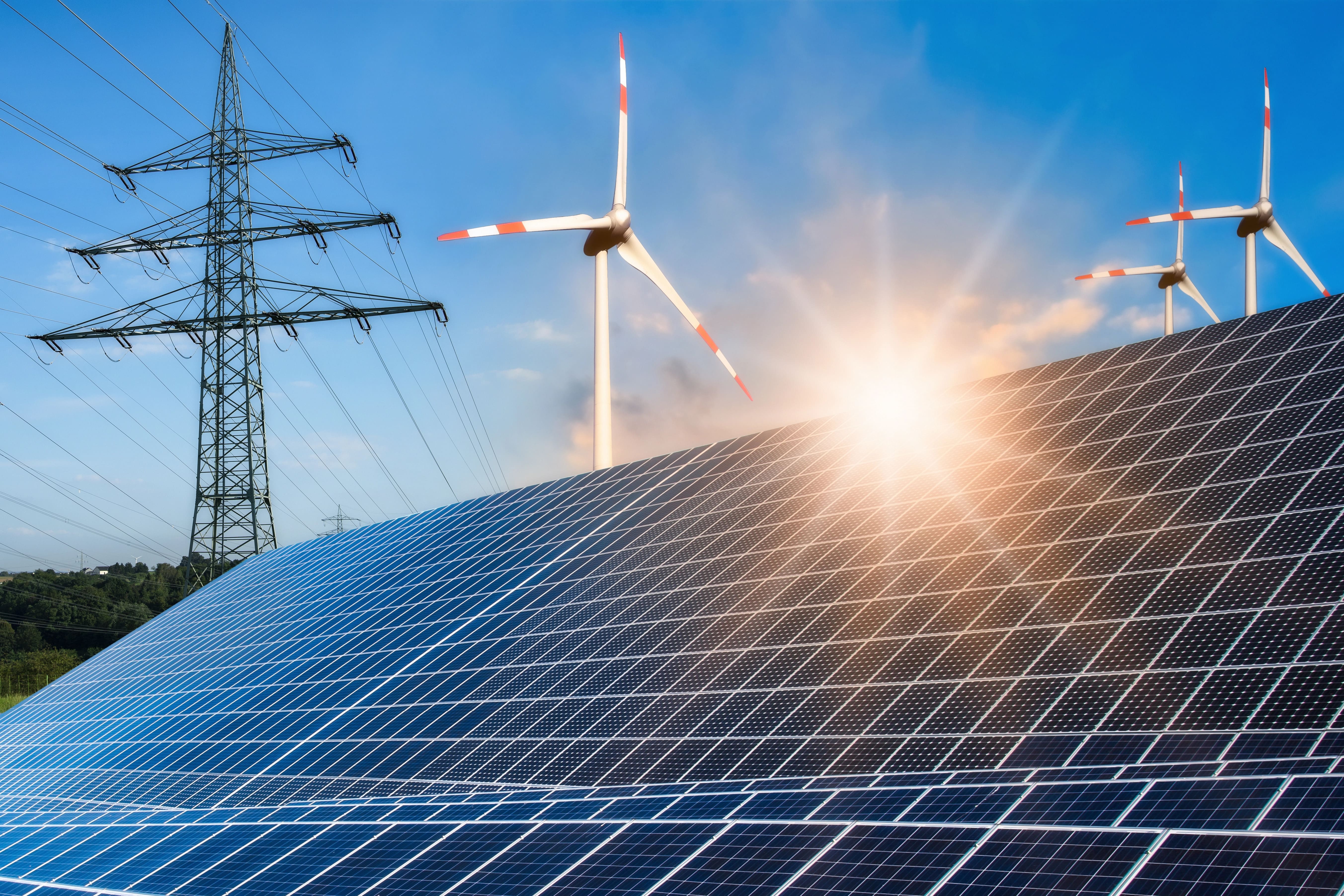
Smart Grids: Challenges in the Distribution Network.
The operation of distribution networks in Switzerland is shaped by local conditions. Topographically and thus technically demanding network structures, a resource-dependent spatial distribution of renewable energies, and the increasing density of decentralized generation plants lead to special challenges. Volatile energies such as wind and solar power as well as new consumers in the distribution network, for example electric vehicles, lead to fluctuating load and feed-in profiles. In operational network management, this manifests itself, among other things, in locally limited voltage maintenance problems, thermal bottlenecks, and increasing complexity in network management.
Classical network planning approaches are reaching their limits here, and dynamic operating strategies based on continuous recording of relevant network parameters are gaining importance. Added to this are high requirements for supply quality and security, which are regulatorily anchored in Switzerland. Voltage deviations, harmonics, or network feedback can directly affect sensitive industrial consumers.
Intelligent power grids (Smart Grids) are the prerequisite for the switch to regenerative energy sources. They form the technological basis to efficiently manage new flexibility requirements, bidirectional energy flows, and increasing data volumes. Today's Smart Grid architectures require intelligent energy management and real-time online monitoring to keep voltage quality stable. At the same time, with the digitalization of the networks, the importance of cybersecurity and secure data processing during operation increases. core elements of a future-proof energy supply.
Data-Based Optimization of Grid Operations.
Modern measurement and testing technology plays a key role in this context. It provides the necessary real-time data, creates transparency regarding network and system conditions, energy flows, and quality parameters, and thus enables data-based control and optimization of grid operation. In this way, measurement technology supports the assurance of high supply quality and forms the basis for sensible energy management. Measuring and testing devices enable network operators to detect deviations early and initiate measures for network stabilization proactively. Thus, measurement technology evolves from a pure analysis tool into an integral component of future-proof distribution network operation.
By implementing intelligent measurement technology, energy companies and network operators can optimize energy consumption, better manage peak loads, and identify potential bottlenecks—with the goal of maintaining network stability. The integration of large data volumes—also in connection with Artificial Intelligence—improves fault forecasts and optimizes efficiency in the Smart Grid. Furthermore, modern measurement systems are a prerequisite for the transparency of consumption data, which can lead to more conscious energy use by end consumers. Improved energy efficiency helps to conserve resources and reduce environmental impact.
Avoiding Power Outages with Preventive Maintenance.
The high security of supply in the Swiss power grids requires systematic and condition-oriented maintenance of the network infrastructure. Defective components in electrical systems and installations represent a safety risk and can lead to expensive disruptions or downtime. For energy supply companies, it is therefore crucial to supplement classic maintenance strategies with predictive maintenance concepts.
With measurement technology, the condition of lines, transformers, or switchgear can be continuously monitored and analyzed. By early detection of deviations and weak points, maintenance measures can be planned specifically. This reduces the risk of failure and supports economical operation. Thermographic measurement methods have established themselves as a proven instrument. Portable thermal imaging cameras make thermal abnormalities and energy losses in electrical and mechanical systems visible. They provide indications of overloads, contact problems, or increased transition resistances. Their use in regular inspections supports condition-oriented maintenance, increases operational reliability, and reduces unplanned repair costs.
Particularly in high-voltage systems, the early detection of insulation faults is of central importance. Partial discharges are considered typical indicators of beginning damage and can lead to serious system failures in the long term. Acoustic measurement methods using acoustic cameras allow for the contactless localization of different types of partial discharges during operation. The measured data obtained provide a sound decision-making basis for targeted measures and support the transition to preventive maintenance.
Power Quality Analyzers for a Stable Energy Supply.
The basis for optimizing energy efficiency and energy consumption is the analysis of the supply network. Good power quality is an essential aspect of regenerative load management in the Smart Grid. Stable grids lower energy costs and reduce failures as well as premature wear. Voltage fluctuations and transients can damage connected devices and machines or cause IT problems. In particular, harmonics are one of the main causes of network disruptions.
Power Quality Analyzers contribute to securing the reliability of the energy supply and minimizing the effects of power quality problems on consumers and companies. They are used for continuous or temporary monitoring in single- and three-phase transmission and distribution networks to quantify irregularities and energy losses. Power Quality Analyzers support troubleshooting and improve preventive maintenance. Disruptions in the power grid can thus be detected early.
Power Quality Analyzers assist utilities and network operators in integrating renewable energies by making grid-related fluctuations and instabilities transparent. This enables optimized network utilization and supports the safe and efficient transformation of the energy supply.
Precise Energy Management with Power Analyzers.
Power analyzers (energy analyzers) also play an important role. They measure and analyze electrical characteristics in power distribution networks, allow for validation of energy flows and consumption patterns, and form the evaluation basis for potential savings as well as maintenance measures. In addition, energy analyzers record load profiles and support targeted load control and load shifting. In this way, the efficiency of the power grid can be maximized and bottlenecks can be avoided.
In modern Smart Grid environments, energy analyzers thus serve as a central instrument for data-based energy management. They help network operators or utility companies identify technical losses, assess network utilization, and prepare investment decisions on a sound basis. In the regulatory context, they provide reliable measurement data for evidence to supervisory bodies as well as for optimizing network fees and reactive power management. In addition, energy analyzers form an important data basis for energy management systems according to ISO 50001 and thus support the sustainable reduction of energy and operating costs.
Conclusion.
Distribution network operators and energy supply companies face several key challenges in the age of Smart Grids. For example, the increasing feed-in of volatile energies such as wind and solar power requires flexible grid control and sophisticated storage solutions. Decentralized power generation and bidirectional energy flows place high demands on grid stability and require robust cybersecurity measures. Furthermore, Smart Grids generate large amounts of data that must be effectively managed, analyzed, and protected. Finally, energy suppliers must also take constantly changing legal requirements into account while remaining economically viable.
In the implementation and efficient use of Smart Grids, modern measurement and testing technology plays a central role. It enables precise monitoring, analysis, and control of the grids—essential for the reliability and stability of the power supply. Intelligent measurement and testing systems make an important contribution to condition-oriented, predictive maintenance and optimization of network infrastructures. Measurement technology thus becomes a connecting element between technology, regulation, and sound investment decisions—and is a decisive building block for the future-proof energy supply.